
Find your dream home in Barcelona

AI-powered property search

Your perfect home in Barcelona is just a few clicks away. Fill in the property finder to get started.

1.713.247
Population
28.5° / 13.6°
Summer peak / Winter day
25.5%
Foreign residents
€5,449
Avg €/m²
Updated 19 Sept 2026How we source our data →

Living in Barcelona

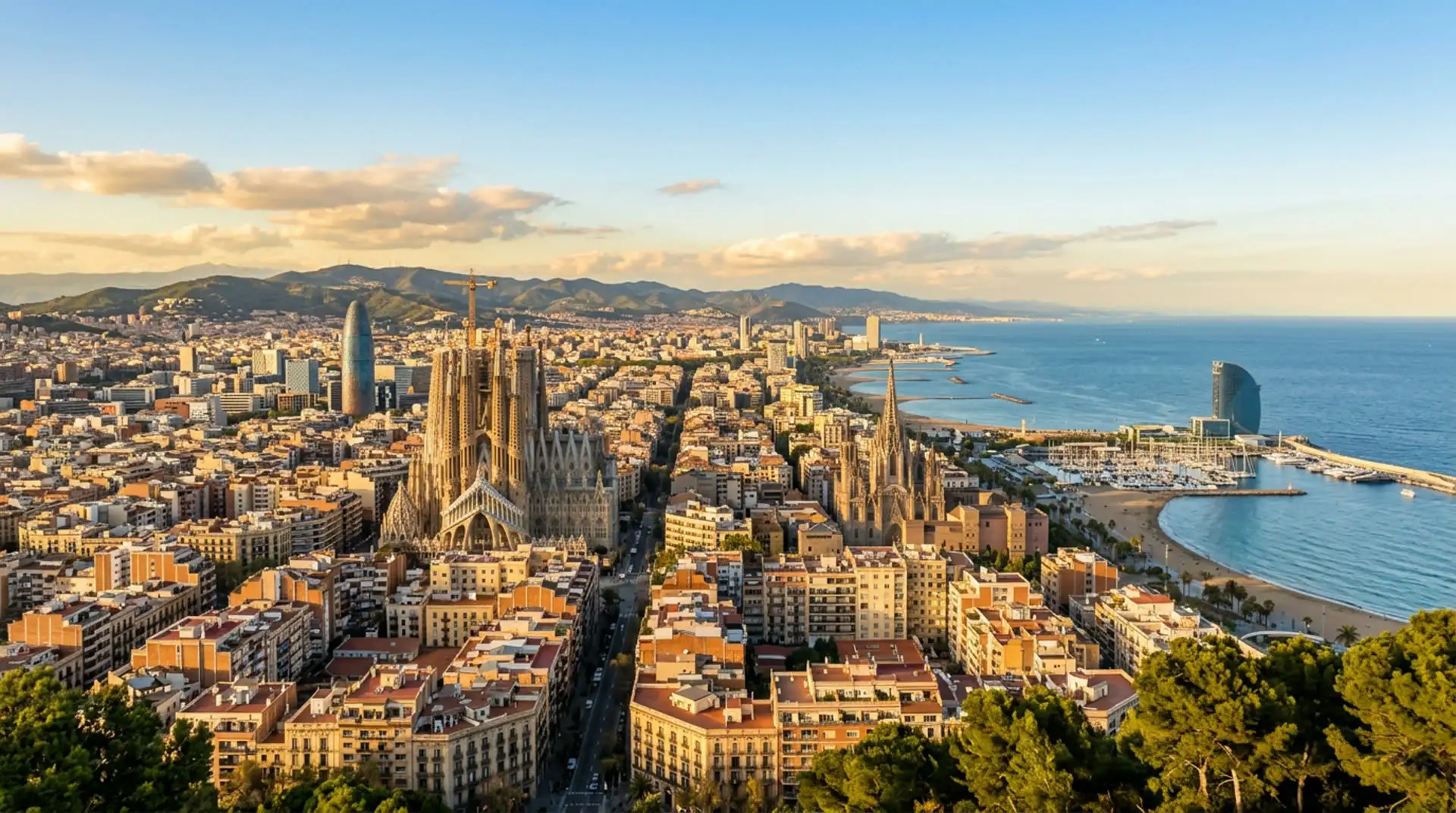
Barcelona is a Mediterranean city built in layers: Roman walls and medieval lanes in Ciutat Vella, the ordered blocks of the Eixample, former industrial quarters and beaches that belong to the city rather than sit beyond it. Markets, workshops, schools and apartment buildings keep daily life visible beneath the architecture and cultural landmarks.

Its geography explains much of its character. The city occupies a narrow plain between the Collserola ridge and the sea, with the Besòs and Llobregat at either end. Older streets gather around the historic centre, the regular grid spreads across the middle, and the waterfront opens the dense city to beaches and promenades. Metro, suburban rail, buses and trams make a car optional for many households, although the usefulness of the network depends on the exact journey.

Barcelona offers the range, work, culture and public transport of a major European city beside the Mediterranean. The trade-off is equally urban: high housing costs, smaller homes, visitor pressure in the centre, and crowded streets and beaches at busy times. Buyers who choose the daily neighbourhood first, rather than treating Barcelona as one market, are more likely to understand what their budget and routine will actually buy.

The verdict

Honestly considered, both sides.

The upside is real. So is the downside. Both matter more than any brochure will admit.

The case for

  • A full city beside the Mediterranean

    Work, universities, hospitals, culture and year-round services sit within the same urban fabric as beaches and the waterfront.

  • Daily life can work without a car

    Metro, suburban rail, buses and trams connect much of the city, while dense neighbourhoods put shops and services close to home.

  • Neighbourhoods offer distinct routines

    Compact historic streets, regular central blocks, hillside areas and waterfront districts give buyers several distinct versions of city life.

  • A superyacht marina in the city centre

    Marina Port Vell brings large-yacht berths and marine services into the central waterfront.

  • La Molina works as a ski day trip

    Spain's oldest winter-sports resort gives Barcelona buyers a practical mountain alternative beyond the coast.

The case against

  • Housing costs are high

    Barcelona asks buyers to pay for access to a major city, and the same budget often buys less space than in nearby cities and towns.

  • Crowds are part of central and coastal life

    Visitor pressure is most visible around major sights, central streets and beaches, especially during busy periods.

  • Outdoor space is limited

    Many homes are apartments in a dense built-up city, so terraces, gardens and straightforward parking can carry a substantial premium.

  • Transport quality depends on the exact route

    The network is extensive, but not every cross-city journey is direct, and the L9 metro service operates in separate sections.

  • Major architecture brings major visitor pressure

    The Sagrada Família received 4,877,567 visitors in 2025, concentrating substantial pressure around the basilica and its surrounding streets.

Editor's note

Where you might be better off elsewhere

Barcelona suits buyers who want dense neighbourhood life, strong public transport and major-city culture beside the Mediterranean. Sitges offers a smaller coastal town within reach of Barcelona, Girona a more compact historic city, Tarragona a quieter Mediterranean city with Roman heritage, and València another full-sized coastal city with a different scale. Barcelona is the stronger fit when city infrastructure and neighbourhood variety matter more than quiet streets or easy driving.

Barcelona on the map

Lifestyle data

Climate

28.5° / 13.6°
Summer peak / Winter day
J
F
M
A
M
J
J
A
S
O
N
D
Low 9.2°CHigh 24.4°C
Annual mean
16.1°C
Rain days
53.3/yr

El Prat de Llobregat municipality, station: Barcelona Aeropuerto, 13 km south west

Average 1981-2010 · AEMET

Property market

€5,449
/m²
+6.8% year on year

Updated 1 Sept 2026

Access

BARCELONA AIRPORT
Barcelona-El Prat J.T.

Community

25.5%
Foreign residents

INE Annual Population Census, nationality basis, 1 January 2025

Barcelona neighborhoods

Where to live and what to expect at each price point.

Housing in the Sarrià-Sant Gervasi district of Barcelona

Sarrià-Sant Gervasi

500.000 - 1.140.000 €Indicative guide prices

It is priced above the municipal asking figure.

Residential
Housing in the Les Corts district of Barcelona

Les Corts

470.000 - 1.080.000 €Indicative guide prices

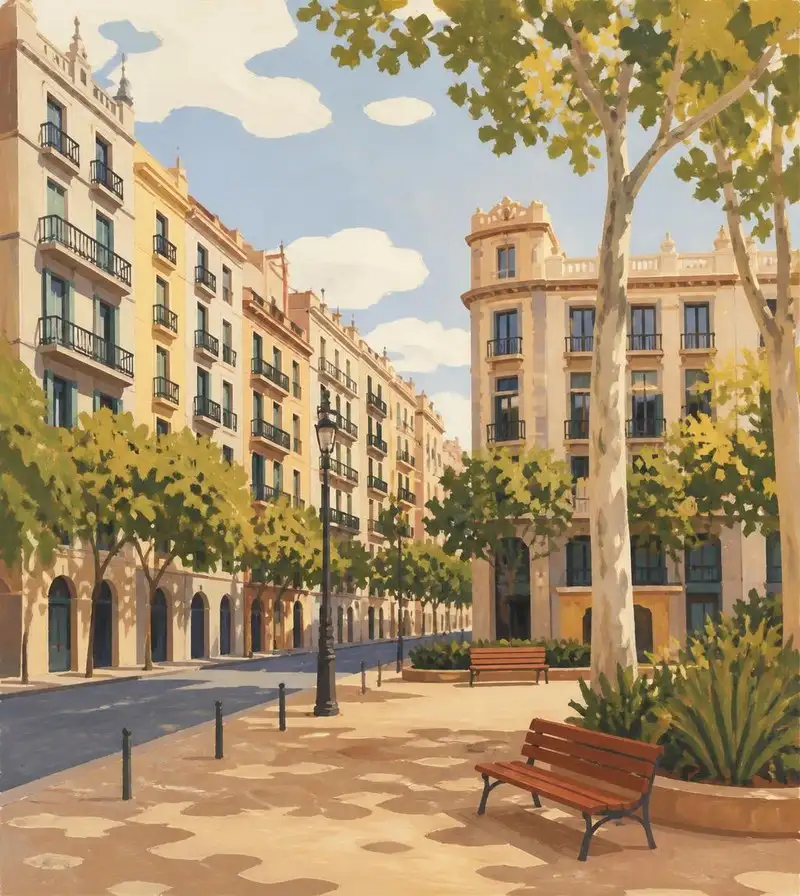
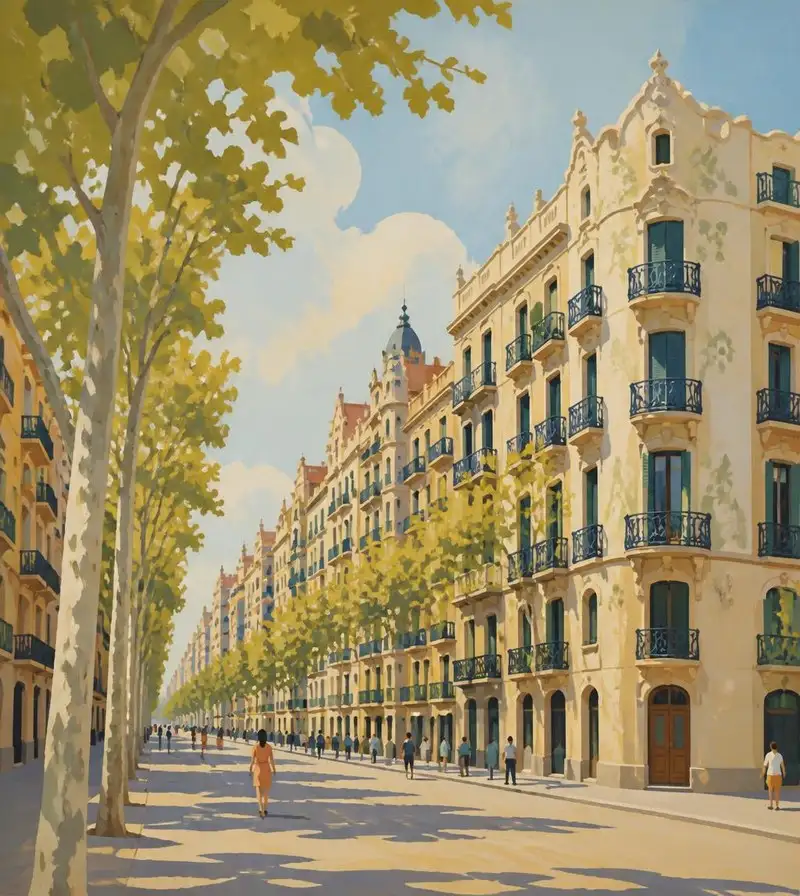
It is priced above the municipal asking figure. A settled residential west side, with university campuses, offices and quick rail links into the centre.
ResidentialUniversity
Housing in the Eixample district of Barcelona

Eixample

460.000 - 1.060.000 €Indicative guide prices

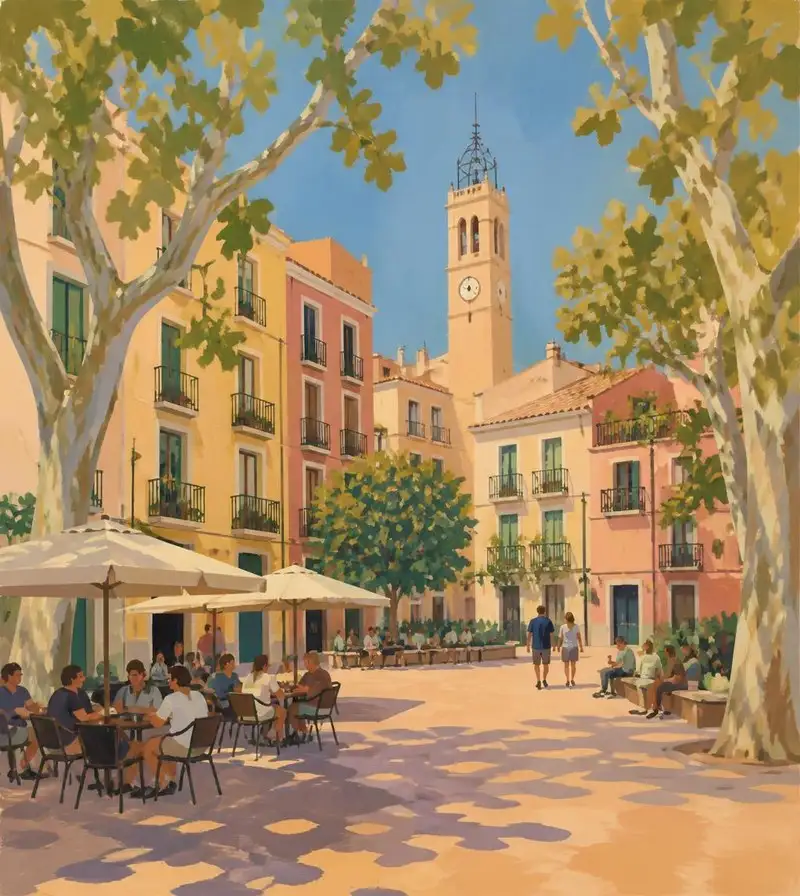
It is priced above the municipal asking figure, and it is rising more slowly than the municipality over the year.
Central
Housing in the Gràcia district of Barcelona

Gràcia

400.000 - 910.000 €Indicative guide prices

It is priced above the municipal asking figure, and it is rising faster than the municipality over the year.
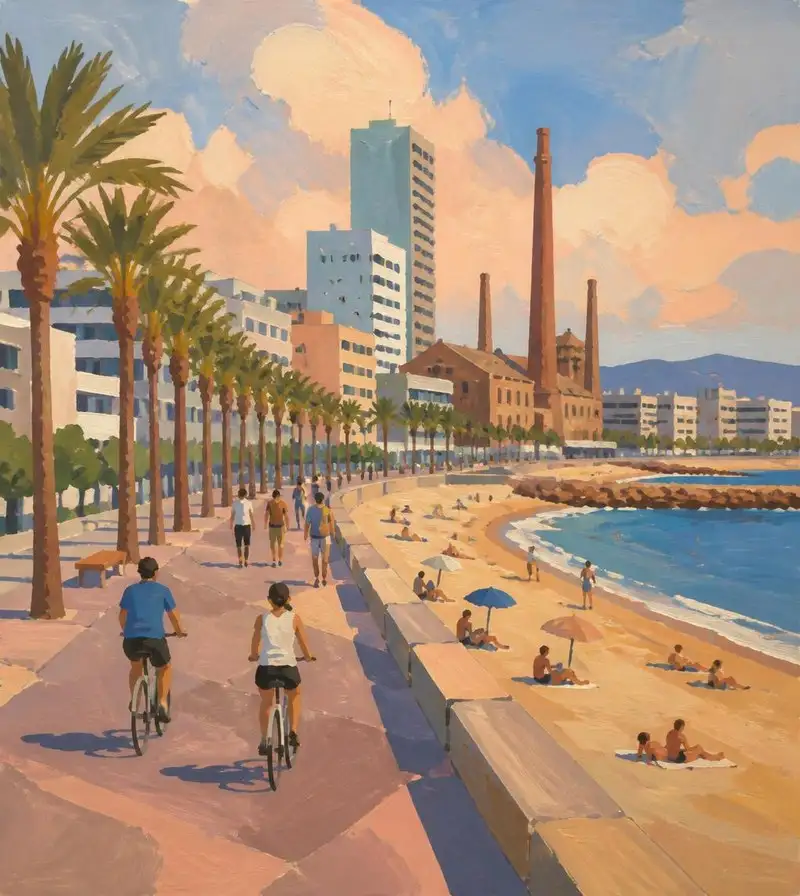
Central
Housing in the Sant Martí district of Barcelona

Sant Martí

380.000 - 860.000 €Indicative guide prices

It is moving in line with the municipality's pace over the year.
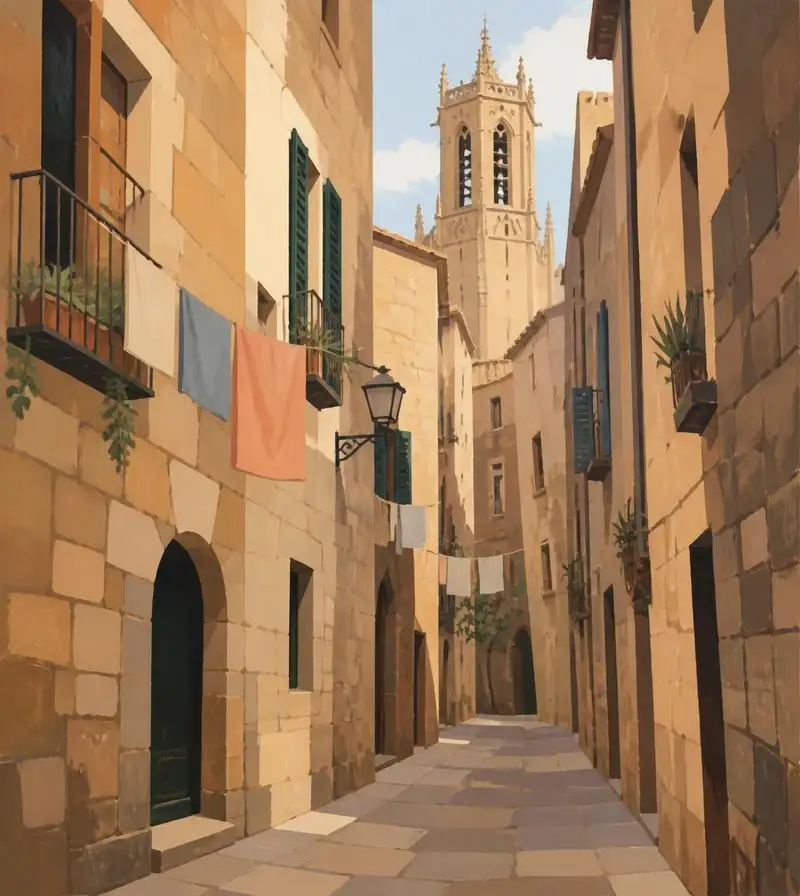
Coastal
Housing in the Ciutat Vella district of Barcelona

Ciutat Vella

340.000 - 770.000 €Indicative guide prices

It is priced below the municipal asking figure, and it is rising more slowly than the municipality over the year.

Historic
Housing in the Sants-Montjuïc district of Barcelona

Sants-Montjuïc

320.000 - 740.000 €Indicative guide prices

It is priced below the municipal asking figure.

Central
Housing in the Horta Guinardó district of Barcelona

Horta Guinardó

290.000 - 670.000 €Indicative guide prices

It is priced below the municipal asking figure, and it is rising faster than the municipality over the year.

Residential
Housing in the Sant Andreu district of Barcelona

Sant Andreu

280.000 - 650.000 €Indicative guide prices

It is priced below the municipal asking figure. Low-rise streets spread around an old town core in the north-east of the city.

ResidentialOld town
Housing in the Nou Barris district of Barcelona

Nou Barris

230.000 - 530.000 €Indicative guide prices

It is priced below the municipal asking figure, and it is rising faster than the municipality over the year.

Residential

Barcelona FAQ

Honest answers to the questions buyers actually ask.

Is Barcelona practical without a car?+
For many households, yes. Metro, suburban rail, buses and trams cover much of the city, and dense neighbourhoods place everyday services close together. Test the route from a specific address to work, school or regular appointments before deciding.
Are Barcelona's beaches part of everyday city life?+
Yes. The beaches sit within the urban waterfront beside housing, promenades and neighbourhood streets. Several stretches can be reached by metro and bus, so the coast is not a separate resort journey.
Why does the neighbourhood matter so much?+
Street pattern, noise, slope, housing type and access to green or coastal space can change over a short distance. A city-wide average cannot describe the routine around a particular home.
What should buyers know about the public transport map?+
The system combines metro, suburban rail, bus and tram services. It is extensive, but L9 operates in separate sections and the tram network is not yet one continuous line, so check the complete journey rather than the nearest stop alone.
What are Barcelona's municipal markets like?+
They are neighbourhood food and retail markets rather than attractions alone. Their role varies by area, but they remain useful signs of an established local centre and everyday foot traffic.
What kind of home is typical in Barcelona?+
Apartments dominate much of the city. Older buildings can offer character and central streets, while newer or less central areas may offer lifts, parking or more efficient layouts. Outdoor space is scarce enough to affect both choice and price.
What are the costs of buying property in Barcelona?+
When buying property in Barcelona, budget for property transfer tax (ITP) of 10% up to €600,000 (11% up to €900,000, 12% up to €1,500,000, 13% above that, progressive bands determine the average rate applied to the taxable base) [ATC: https://atc.gencat.cat/es/tributs/itpajd/tpo/tarifes-tipus/], plus roughly 3-4% in notary, land registry and legal fees. Agency commission is usually paid by the seller. On the mainland and the Balearics, new builds pay VAT (IVA) of 10% plus AJD stamp duty instead of ITP. Transfer tax is set by Cataluña rather than nationally, and reduced rates can apply for main homes and younger buyers.
What are the ongoing costs of owning property in Barcelona?+
Annual property ownership costs in Barcelona include IBI (property tax) of 0.4-1.1% of cadastral value, community fees (for apartments), rubbish collection tax (basura), utility bills, and property insurance. Budget approximately 2-4% of property value per year for all running costs. IBI is set by the town hall of Barcelona within a national band, so it is municipal rather than regional.
What taxes do I pay when selling property in Barcelona?+
When selling property in Barcelona, you pay capital gains tax (plusvalía) on the profit at rates of 19-26% depending on the gain amount. Non-residents have 3% of the sale price withheld at completion. You may also pay municipal capital gains tax. Main residence exemptions may apply for residents over 65. Capital gains tax is national, so it is the same in Cataluña as anywhere in Spain. Plusvalia municipal is set by the town hall of Barcelona and has had two calculation methods since the 2021 reform, so ask your lawyer which one is cheaper for you.
Can I still get a Golden Visa by buying property in Spain?+
No. Spain withdrew the Golden Visa property investment route in April 2025, so buying in Barcelona no longer leads to residency. Non-EU buyers who want to live in Spain apply for a separate permit instead, most often the non-lucrative visa (proof of income and private health insurance) or the digital nomad visa (remote work for non-Spanish clients). Ask an immigration lawyer which route fits your situation before you buy.

Transfer tax rates as of August 2026. Rates are set per autonomous community and do change. Confirm the current figures with a Spanish lawyer or tax adviser before you budget.

How es.casa helps you

Honest local guides

The pros and the cons of every town, with sourced data on prices, climate and costs.

Your own free dashboard

Your property search, saved cities, mortgage calculator and a step-by-step buying guide, from your first search to getting the keys.

Agents and owners come to you

Local agents who speak your language, and owners selling their own home, contact you about homes that fit your search.

You stay in control

Agents and owners ask to connect first. Your contact details are only shared with the people you accept.

Foreign buyer's guide

New to buying property in Spain?

Our comprehensive guide covers everything foreign buyers need to know - from NIE numbers and residency permits to mortgages and legal requirements.

Mortgage Calculator

Calculate your Spanish mortgage

Use our free mortgage calculator to estimate monthly payments, compare loan scenarios and understand the true cost of buying in Spain.